
Ask five potters whether a teapot should be fired to cone 6 or cone 10 and you'll get five confident answers, usually over a cup of tea. The truth is less tribal. Both temperatures produce teapots that pour cleanly, hold heat, and last for decades. What changes is the clay you can use, the glaze palette you can chase, how the kiln behaves on firing day, and how much attention the whole process asks of you. Choosing between them is a matter of matching the cone to your studio, your forms, and the way you actually work.
What the Cone Number Actually Measures
A cone is not a temperature setting. It measures heat work: the combined effect of how hot the kiln got and how long the work stayed there. Cone 6 sits in the mid-range, roughly 2,230°F (1,220°C) at a typical firing rate. Cone 10 is high-fire, closer to 2,340–2,380°F (1,280–1,305°C). Fire slowly and a clay can mature at a lower peak reading; race to temperature and you may need more.
For teapots, that matters because maturity is what gives you a dense, non-leaking body. A cone 6 stoneware that is fully vitrified will serve you better than an underfired cone 10 body every time. The cone number is a target, not a medal.
Clay Bodies: Plasticity Versus Density
Mid-range stonewares tend to be forgiving. They throw and handbuild well, tolerate a wider firing range, and handle the awkward geometry of a teapot — a fat belly, a narrow spout, a pulled handle — without fighting you. Many are rated cone 4–6 or 5–7, which gives you a cushion if the kiln overshoots. Their downside is porosity if underfired, and bloating or iron speckling if pushed too far.
Cone 10 stonewares and porcelains are tighter and harder. They feel different on the wheel and different in the hand: cooler, denser, less absorbent. That lower absorption reduces staining over years of daily tea. The trade-off is fussiness. Porcelain warps, sags, and cracks at handle joins when wall thickness changes too fast. Thin, elegant teapots are far more achievable at cone 10 — if you're prepared to lose a few along the way.
A tip that saves pots
Whichever cone you choose, keep walls and handle joins consistent in thickness. Most teapot failures come from a thick handle body meeting a thin wall, not from the firing temperature.
Glaze Fit Is the Real Test
More teapots are ruined by a poorly fitted glaze than by a body fired to the "wrong" cone. Glaze and clay expand and contract at different rates as they cool, and teapots are especially unforgiving: they take boiling water, sit on cold counters, and hold mildly acidic liquid for hours.
- Crazing — the fine web of cracks that appears when the glaze shrinks more than the clay. On a teapot interior it traps tea residue, stains brown, and never quite cleans up. Crazed surfaces on food-contact ware are generally considered undesirable.
- Shivering — the opposite problem, where the glaze is under compression and flakes off the rim or spout. Sharp edges, exposed clay, and a pot you can't trust.
- Pinholing and crawling — often a sign the glaze never fully matured, which is more common when a cone 6 glaze is fired fast or applied thick.
Cone 10 has a reputation for glaze fit because long, high firings let glazes fully melt and bond to the clay. That reputation is earned. But modern mid-range glazes, tested properly on your clay, are just as reliable. The key word is tested. Make test tiles from the same clay body, glaze them at the same thickness, fire them together, then pour boiling water over them and look again a week later.
Durability, Thermal Shock, and Daily Handling
Density helps a teapot survive a crowded dish rack, but thermal shock is a separate problem. A thick-walled pot can crack when boiling water hits a cold body, regardless of cone, because the inside surface expands before the outside catches up. Warm the pot first — that is exactly why serious tea drinkers rinse with hot water — and your teapots will last longer in anyone's kitchen.
Handles are the other weak point. Porcelain handles joined with slip can fail at the seam, especially when someone lifts a full pot by the handle alone. A stoneware with a little grog, or a handle pulled from the same batch of clay at the same consistency, will outlast a beautiful but brittle alternative. Rims and spouts chip, so ease them with a damp sponge before the bisque firing and keep grit off the kiln shelf underneath.
Firing Costs and Studio Logistics
Cone 10 costs more per firing: more energy, faster element and kiln furniture wear, longer turnaround, and far more care in loading. If you sell teapots, that cost shows up in your schedule as much as in your kiln bill. A cone 6 electric kiln can be packed and fired more often, which means more cycles of testing and more finished pots.
What cone 10 buys you is atmosphere and surface — reduction shinos, copper reds, tenmoku breaking over a carved foot, celadons pooling in a spout. If those are the pots you want to make, no mid-range substitution will satisfy you. If you want repeatable results and a wide commercial glaze palette, mid-range is the easier road. Plenty of studios run both and fire teapots in whichever kiln has space.
Food Safety: What Actually Matters
Both cones can produce safe, food-contact teapots. The variables are the same at either temperature: a fully vitrified body, a durable and well-fitted glaze, and a formulation that doesn't release harmful amounts of metals into a hot, mildly acidic drink. Tea is acidic enough that leaching deserves respect, especially with bright colorants, high-alkali surfaces, or copper greens on the interior.
- Use lead-free and cadmium-free glazes, and commercial glazes rated for food contact.
- Keep the interior simple. A clear or white liner glaze is easy to inspect and easy to trust.
- If you sell teapots, have representative pieces tested for leaching by a ceramics lab and check your local requirements for food-contact claims. That is a question for a professional, not a forum thread.
Choosing Your Cone Without Regret
Pick cone 10 if you want dense, thin-walled pots, reduction surfaces, and you have a kiln that can absorb the cost and maintenance. Pick cone 6 if you want reliable glazes, frequent firings, forgiving clay, and a quicker path from idea to tested teapot.
Then do the unglamorous work. Make six test tiles, not one. Keep a notebook of glaze thickness and firing rate. Fire a teapot, fill it, pour it, leave tea in it overnight, and inspect the interior the next morning. The cone number is a tool, not an identity. What matters is that your clay is mature, your glaze fits, and your spout doesn't drip.
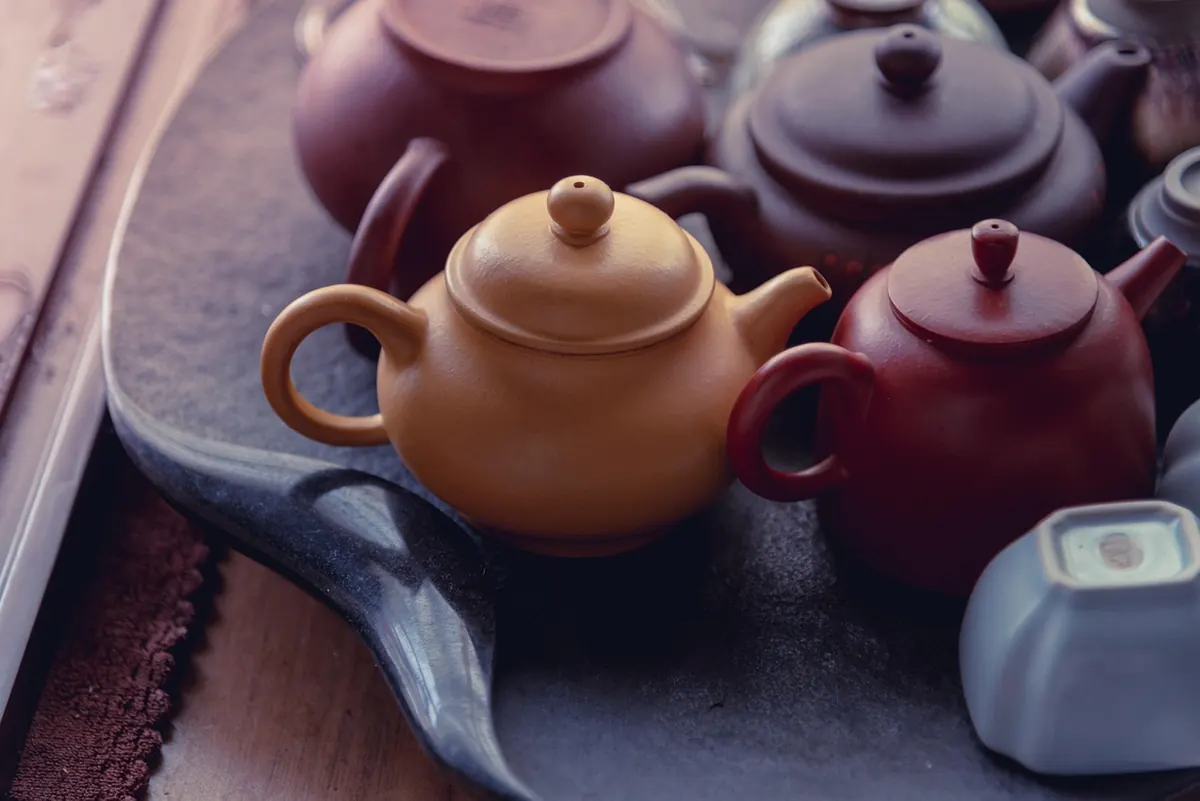
Photo: ERICKZHOU / Pixabay